📝 Introduction
Road infrastructure plays a crucial role in economic growth, transportation efficiency, and public safety. Whether constructing bituminous (asphalt) roads or PCC (Plain Cement Concrete) roads, following best construction practices ensures durability, load-bearing strength, and long-term performance.
Proper planning, material quality, and execution techniques are essential to prevent premature failures such as cracks, potholes, and surface deterioration.
🛣 Types of Road Construction
Bituminous (Asphalt) Roads
- Flexible pavement structure
- Suitable for highways and urban roads
- Smooth riding surface
- Faster construction time
PCC (Concrete) Roads
- Rigid pavement structure
- High durability and long lifespan
- Suitable for heavy-load and industrial areas
- Lower maintenance requirements
⚙️ Key Best Practices for Road Construction
1️⃣ Proper Site Preparation & Survey
A strong road begins with proper groundwork.
✔ Soil testing and evaluation
✔ Removal of vegetation and debris
✔ Subgrade leveling and compaction
✔ Drainage planning
A stable foundation prevents settlement and cracking.
2️⃣ Strong Subgrade & Base Layer Preparation
The base layer supports the entire pavement load.
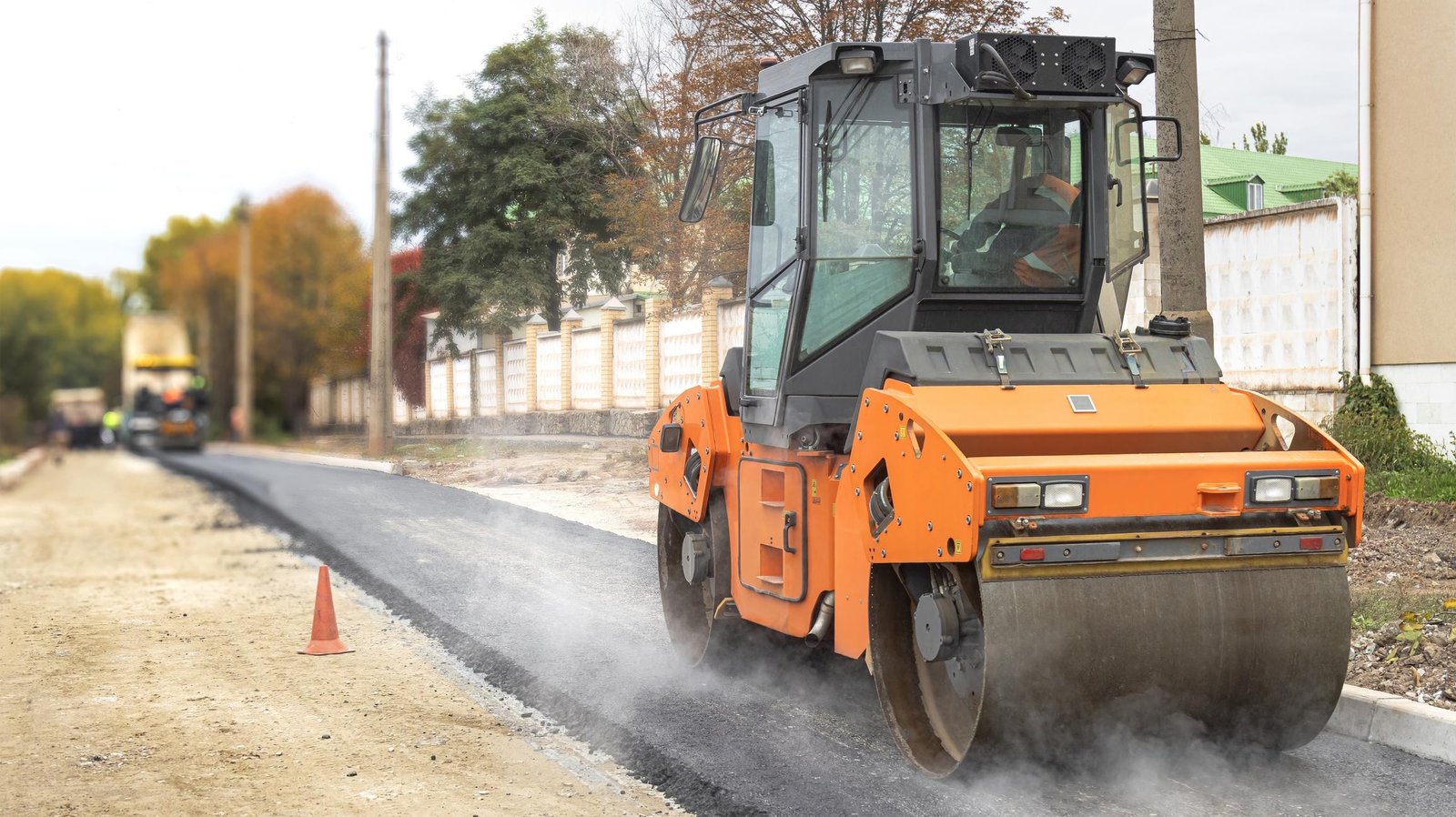
✔ Proper compaction using rollers
✔ Use of quality aggregates
✔ Moisture control during compaction
✔ Uniform thickness maintenance
3️⃣ Quality Material Selection
Material quality determines road lifespan.
✔ Certified aggregates and bitumen
✔ High-grade cement for PCC roads
✔ Clean sand and proper mix ratios
✔ Material testing before usage
4️⃣ Proper Compaction & Layering
Compaction ensures strength and durability.
✔ Layer-by-layer compaction
✔ Uniform thickness control
✔ Use of vibratory rollers and compactors
✔ Avoid over or under compaction
5️⃣ Bituminous Road Laying Best Practices
✔ Maintain proper asphalt temperature
✔ Ensure uniform spreading and leveling
✔ Use mechanical pavers for consistency
✔ Proper rolling sequence for smooth finish
6️⃣ PCC Road Construction Best Practices
✔ Correct concrete mix design
✔ Proper formwork and alignment
✔ Joint cutting to prevent cracks
✔ Adequate curing for strength development
7️⃣ Drainage & Water Management
Poor drainage is a major cause of road damage.
✔ Side drains and slope design
✔ Water runoff management
✔ Prevention of water stagnation
✔ Shoulder protection
8️⃣ Road Safety Features Installation
✔ Road markings and reflectors
✔ Retro-reflective sign boards
✔ Guard rails and barriers
✔ Street lighting where required
⚠️ Common Mistakes to Avoid
❌ Poor compaction of base layers
❌ Using substandard materials
❌ Inadequate curing of PCC roads
❌ Improper drainage planning
❌ Ignoring expansion joints in concrete roads
🏗 Benefits of Following Best Practices
✔ Longer road lifespan
✔ Reduced maintenance costs
✔ Improved road safety
✔ Better load-bearing performance
✔ Resistance to weather damage
🏗 Conclusion
Following best practices in road and PCC construction ensures durable, safe, and long-lasting infrastructure. From proper site preparation and quality materials to drainage planning and finishing, each step plays a vital role in delivering high-performance roads that serve communities for years.