Railway infrastructure projects involve complex operations, heavy machinery, and high-risk working environments. Ensuring safety is critical to protect workers, maintain operational continuity, and comply with railway safety regulations. Implementing proper safety practices not only reduces accidents but also improves efficiency and project quality.
🚧 Importance of Safety in Railway Projects
Railway work zones often operate under live traffic conditions, making safety protocols essential. Proper safety measures help prevent injuries, equipment damage, and service disruptions.
Key benefits of strong safety practices include:
✔ Protection of workers and supervisors
✔ Prevention of accidents and operational hazards
✔ Compliance with railway safety regulations
✔ Improved project efficiency and reliability
🦺 Essential Safety Practices
1️⃣ Use of Personal Protective Equipment (PPE)
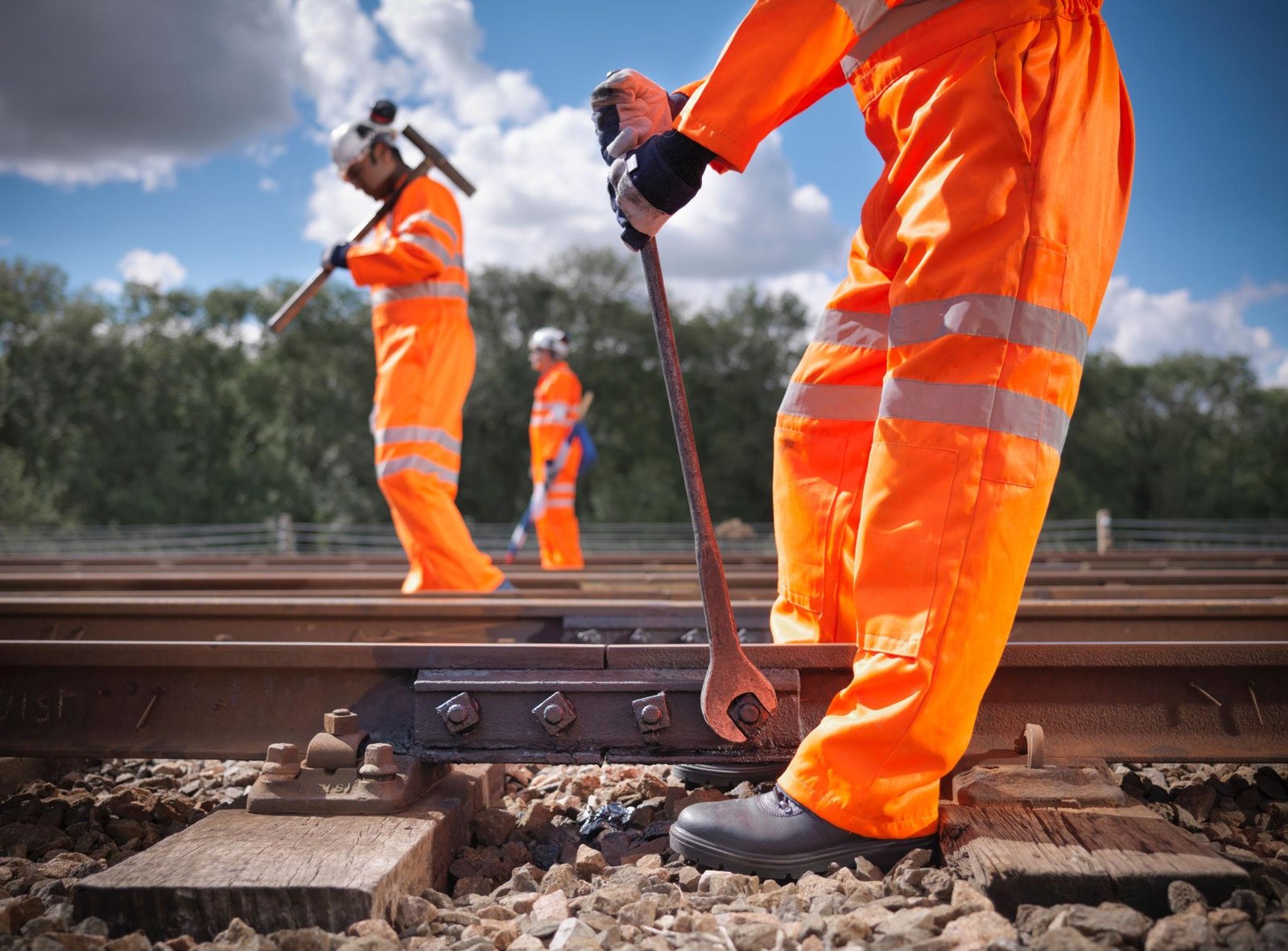
All personnel must wear appropriate safety gear.
- Safety helmets
- High-visibility jackets
- Safety shoes
- Protective gloves
- Eye protection equipment
PPE is the first line of defense against on-site hazards.
2️⃣ Proper Site Safety Planning
Before work begins, safety planning is essential.
- Risk assessment and hazard identification
- Worksite safety briefing
- Emergency response planning
- Clear safety signage and barricading
3️⃣ Working Under Traffic Protection
Railway works often occur under traffic blocks or near live tracks.
- Follow railway traffic block protocols
- Deploy trained safety flagmen/watchmen
- Maintain safe clearance from active tracks
- Ensure communication with control stations
4️⃣ Safe Handling of Tools & Equipment
Improper handling of heavy tools and machinery can cause serious injuries.
- Use certified tools and equipment
- Regular inspection and maintenance
- Proper lifting techniques
- Operator training and supervision
5️⃣ Track Protection & Worker Positioning
Workers must maintain safe positioning while working near tracks.
- Maintain safe distance from moving trains
- Avoid standing on active rails
- Stay alert to warning signals
- Use designated safety zones
6️⃣ Rail Welding & Cutting Safety
Rail welding and gas cutting involve high temperatures and sparks.
- Use fire-resistant protective gear
- Keep fire extinguishers nearby
- Ensure proper ventilation
- Follow welding safety protocols
7️⃣ Weather & Environmental Safety
Weather conditions can affect worksite safety.
- Avoid work during heavy rain or storms
- Use anti-slip safety footwear
- Monitor heat stress and dehydration risks
- Ensure proper lighting for night work
⚠️ Emergency Preparedness
Every railway project site should be prepared for emergencies.
✔ First aid kits and trained personnel
✔ Emergency evacuation procedures
✔ Fire safety equipment
✔ Quick communication channels
✅ Safety Culture: A Shared Responsibility
Safety is not only the responsibility of supervisors but of every team member on site. Creating a safety-first culture ensures long-term success and protects lives.
🏗 Conclusion
Railway infrastructure projects demand strict adherence to safety practices to ensure worker protection and uninterrupted operations. By following proper safety protocols, using protective equipment, and maintaining site discipline, construction teams can deliver projects safely and efficiently.